8 Sept 2026
Two researchers celebrated for new insights into the management of obesity
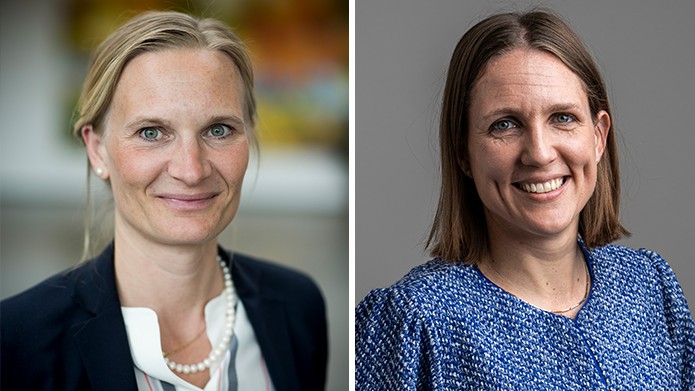
For the second time, the Danish Association for the Study of Obesity (DASO) and the Novo Nordisk Foundation are awarding the Flemming Quaade Prize for Outstanding Obesity Research and the Early Career Obesity Research Award. This year's prizes go to Professor Signe Sørensen Torekov and Assistant Professor Lærke Smidt Gasbjerg, respectively, for research into crucial aspects of long-term obesity management.
For many years, obesity research has focused on developing effective interventions to reduce weight, but to improve long-term health, we need new knowledge about the biology of weight loss and how it can be maintained.
This year's prize recipients have each added new evidence to that picture – insights that have already improved our understanding of healthy weight loss. Their work may ultimately help shape the future management of obesity, a growing health challenge worldwide that is linked to an increased risk of type 2 diabetes, cardiovascular disease, and certain forms of cancer.
The recipients were selected by an independent, international review committee and will be honoured in November at the DASO Annual Meeting – a gathering of Denmark's leading voices in obesity science.
“In DASO, we are delighted once again to have the opportunity to recognise two pioneering researchers in obesity science through these awards, which are made possible by our collaboration with the Novo Nordisk Foundation,” says Carsten Dirksen, Chair of the DASO Board of Directors. “This year's recipients truly embody the purpose of the awards, namely, to celebrate scientific excellence and inspire continued research and innovation for the benefit of people living with obesity.
“The selection of these two researchers also highlights the exceptionally high quality of obesity research being conducted within the Danish scientific community, a point strongly emphasised by the international assessment committee. We warmly congratulate both winners and very much look forward to celebrating their achievements and following the continued impact of their research in the years to come.”
Understanding long-term weight regulation
Signe Sørensen Torekov, Professor of Translational Metabolism at the University of Copenhagen, receives the 2026 Flemming Quaade Prize for Outstanding Obesity Research for her research into how weight loss can be sustained over time. The prize is awarded for her substantial scientific output and international impact, her ambitious future research programme, and her leadership in Danish obesity research.
Torekov’s research has provided key insights into the challenges of long-term weight loss maintenance, and the biological, behavioural, and hormonal mechanisms that influence weight regain. Her findings have contributed directly to changes in obesity management strategies around the world.
With support from the prize, Torekov will investigate how exercise restores communication between the body and the brain. She will examine whether exercise increases responsiveness in brain regions that regulate appetite and reward. The aim is to understand the biological mechanisms through which exercise may help prevent weight regain.
“I am extremely honoured to receive the Flemming Quaade Prize for Outstanding Obesity Research,” Torekov says. “This recognition from an international panel of experts is a tremendous acknowledgement of the collaborative efforts of my research team and colleagues.
“I am grateful for the opportunity to contribute to a deeper understanding of obesity and, ultimately, to improve long-term health and quality of life.”
New knowledge about gut hormone GIP
Lærke Smidt Gasbjerg, tenure-track Assistant Professor and research group leader at the University of Copenhagen and the Center for Clinical Metabolic Research at Gentofte Hospital, receives the 2026 Early Career Obesity Research Award for her work to advance understanding of how gastrointestinal hormones regulate metabolism and energy balance. The award recognises her innovative research programme, scientific leadership, and potential to shape the future of obesity research.
Gasbjerg's work has shed new light on the gut hormone GIP in particular. She has clarified the hormone's role in regulating blood sugar, fat tissue function, and the body's energy balance, and developed new tools for studying the GIP receptor in humans. In her prize-funded project, Gasbjerg will investigate the mechanisms at work in obesity interventions that target both GIP and a second gut hormone, GLP-1.
“In recent years, we have gained ever-greater understanding of the biology of body weight regulation and weight loss,” says Gasbjerg. “My favourite hormone, GIP, seems to both be involved in the regulation and have therapeutic potential.
“I am honoured to receive this award for our work, and I look forward to the opportunities it brings. In our next study, we will explore how glucose is distributed in the human body when GIP-based therapy is combined with GLP-1.”